

“Each autumn, the first rains touch the soil of Palestine. The hills of Bethlehem come alive with one of the most cherished traditions: the olive harvest. It is more than work; it is a time of faith, joy, and identity. Families gather from the youngest to the oldest, sharing meals under the trees, pressing olives into oil, and passing on the story of tradition from one generation to the next.”
The olive harvest in Bethlehem always begins with my father’s words. Every year, as the season approaches, his voice echoes in the house:
“حضروا حالكم، قرب لقطاف” “Get yourselves ready, the harvest is near.”
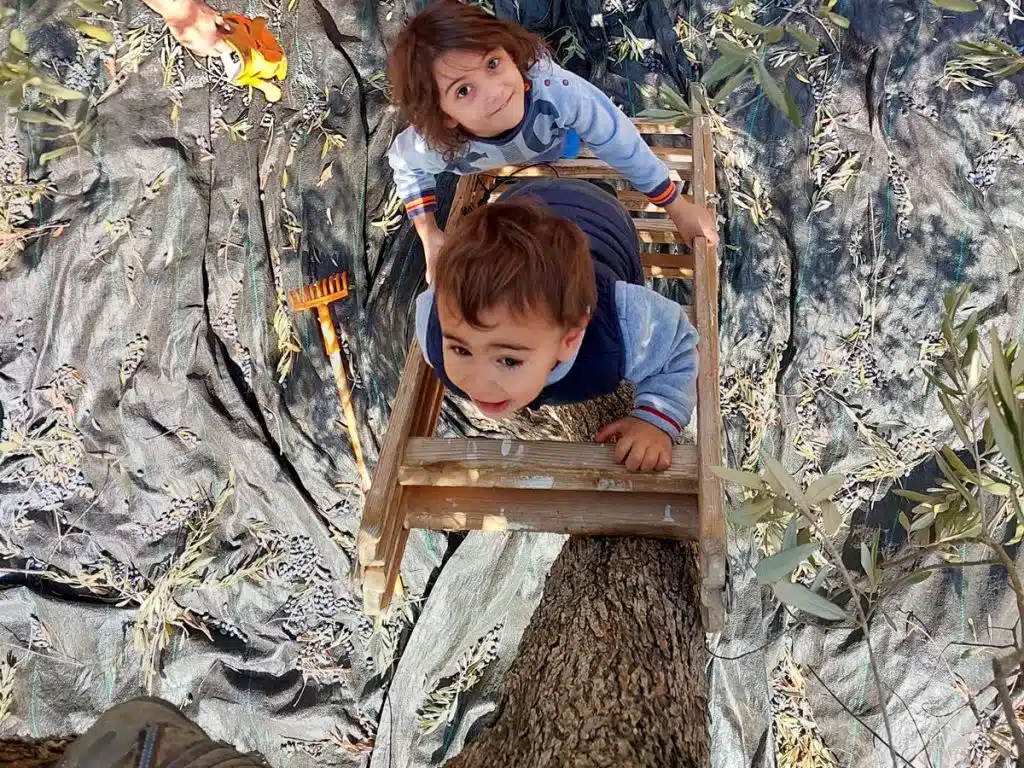
He starts by preparing everything we’ll need: green sheets to spread under the trees, buckets and flasks of water, and the long sticks we use to gently knock the olives down. Then he calls everyone: family, friends, cousins, and neighbors. Whoever is free comes, and sometimes children skip school and adults take a break from work just to dedicate themselves to the harvest days.
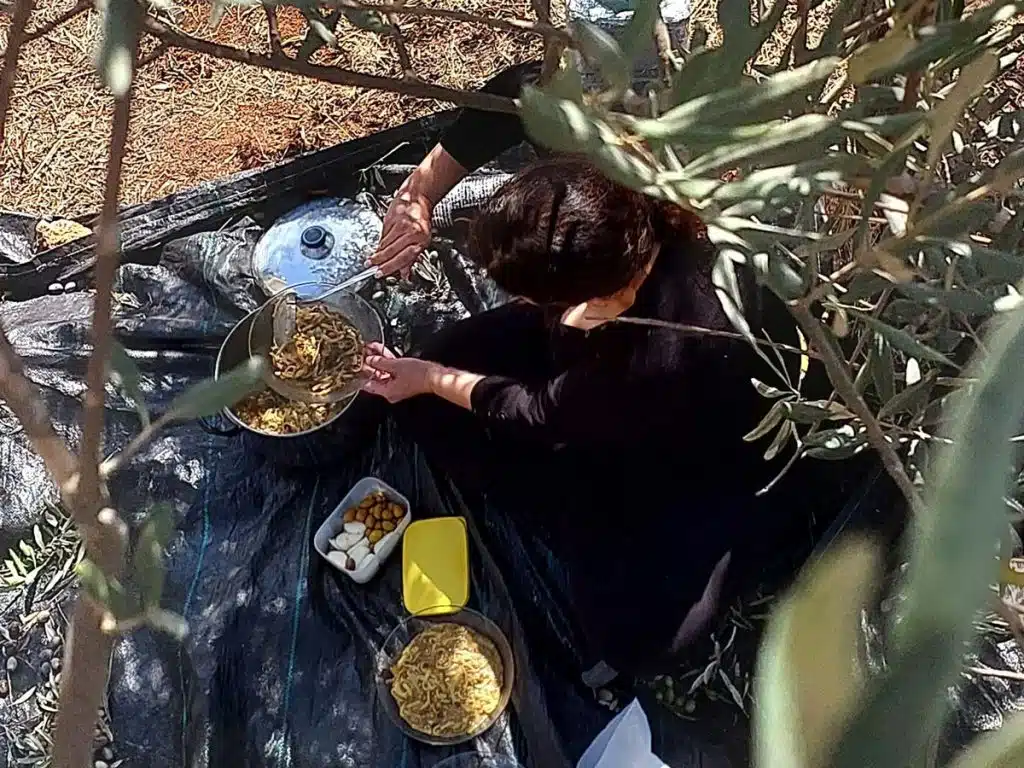
I remember my grandmother preparing delicious food for us for lunch: a simple dish of lentils and bread, always with a small plate of olives. The harvest takes several days; we start from early morning until just before sunset. We would wait for the first rain of the season, because only then are the olives clean and shiny. After that rainfall, my father would choose the day, and we’d head together to our land.
The Tree of Blessings
From this blessed tree, we receive more than food. My grandmother would pickle the olives, and we would take the rest to the press to make oil, our mūneh, the family’s yearly supply. Olive oil, often called “liquid gold,” sustains households, enriches Palestinian cuisine, and even carries spiritual meaning in our traditions.
The tree gives in many ways. Pruned branches become firewood, warming families on cold Bethlehem nights. From olive wood, artisans carve nativity scenes, crosses, and rosaries that travel across the world, carrying the story of Bethlehem and offering families here a vital income. Even the leaves, steeped in hot water, are part of ancient healing remedies.
The Olive Tree in the Bible
The olive tree has always been a sacred symbol in the Bible. It is a sign of peace, blessing, and God’s faithfulness. After the great flood, Noah’s dove returned to the ark with an olive branch in its beak (Genesis 8:11) — showing that the waters had gone down and peace had returned to the earth.
For us in Bethlehem, this makes the olive tree even more special. It is a reminder of faith, hope, and God’s promise of new beginnings.
Challenges and Resilience
The harvest of Palestinian olive trees always carries hardship. In Bethlehem and Beit Jala, families live surrounded by walls, checkpoints, and blocked roads. Many struggle just to reach their fields, and some have even lost parts of their land. Restrictions make farming difficult, yet every year, families go out to harvest wherever they still can. Each season becomes an act of resilience — a way of saying, we belong here. Like the olive tree, our roots run deep in this soil, and we stay here.
This tree is our happiness, our pride, and our deep love for Bethlehem, the land of peace. Wherever there is an olive tree, there is blessing in our houses.


